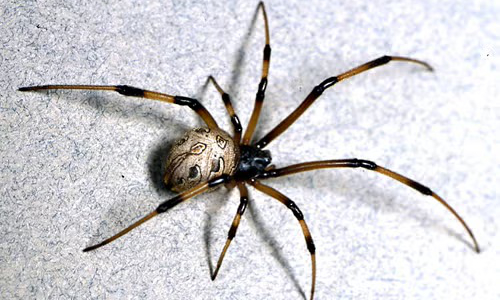
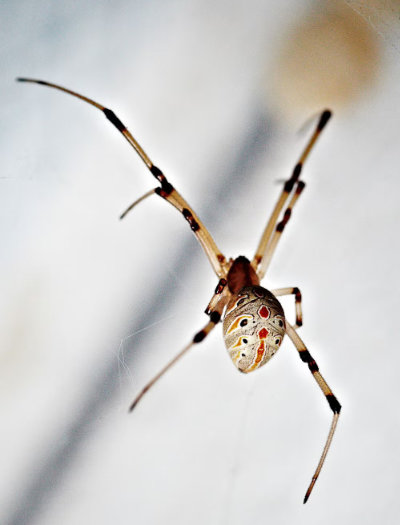
How to Identify a Brown Widow
Attention arachnophobes!
You may want to skip this story about brown widow spiders proliferating in Mission Viejo. For the curious, read on! 🤓
Black widow spiders are common throughout the West. Their brown widow cousins, Latrodectus geometricus, established themselves in Southern California just over 20 years ago—the first specimens were found in Torrance in 2003. The invasive species is now suspected of spreading northward into Central California.
Unlike the black widow, the brown widow is mottled tan and brown with black and red accent markings.
Brown widows tend to inhabit different environments than black widows. It’s not uncommon to find them—or their spiky egg sacs—under your home’s eaves, on window ledges, inside the recessed handles of plastic trash cans or under garden furniture.
Brown widows “form a strong protection of webbing where they hide during the day that some call a hammock,” says James A. Bethke, a nursery farm advisor for Riverside and San Diego counties.
Are Brown Widow Bites Dangerous?
A brown widow’s venom is just as toxic as that of other widow spiders, but they don’t inject as much, making their bite less dangerous. The two primary symptoms of a brown widow bite are pain at the time of the bite and a residual red mark—not much different from the bite of a typical household spider.
Treatment can be as simple as washing the area with soapy water and using ice to help reduce pain.
The bottom line: Brown widow spiders are in Mission Viejo to stay. They should be respected, but they don’t need to be feared.